
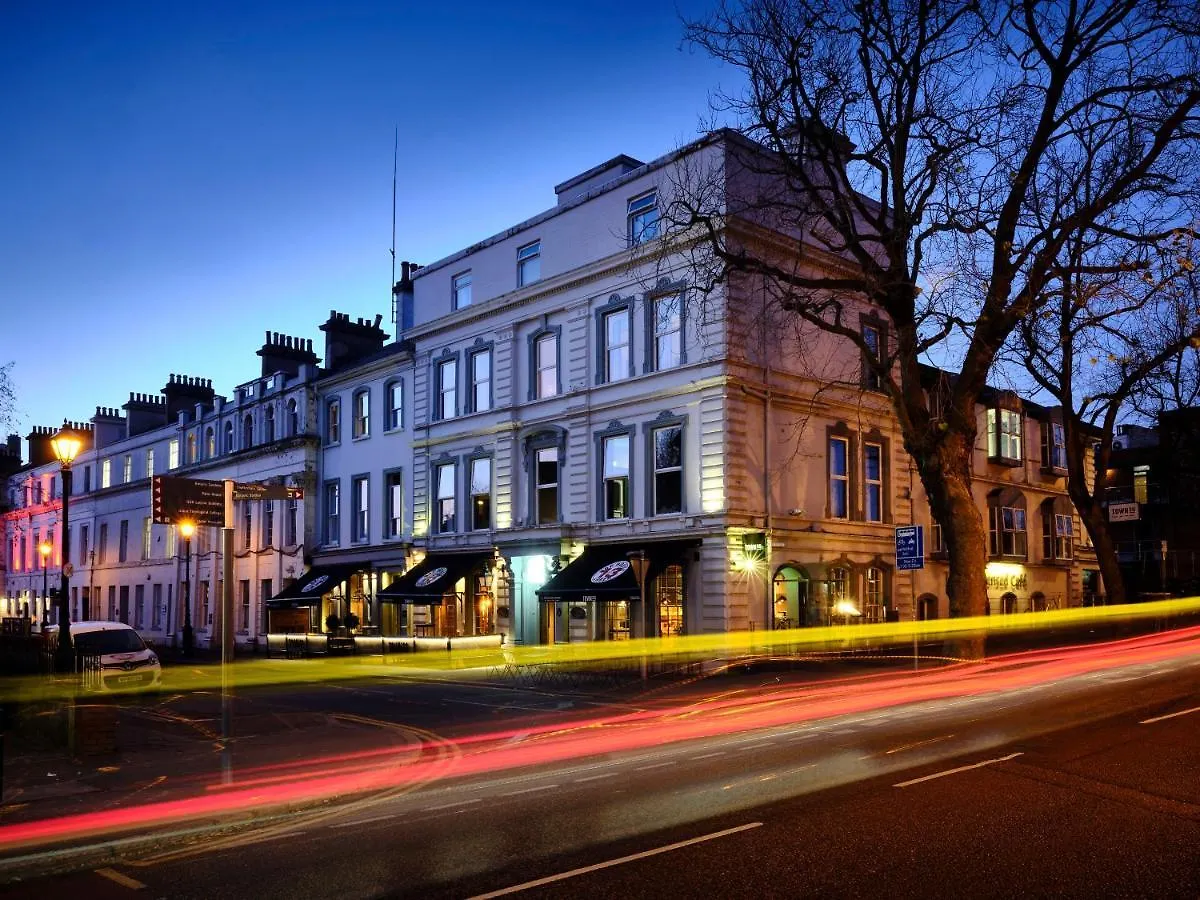
Queens Quarter sits at the southern edge of Belfast city centre, anchored by Queens University, the Botanic Gardens, and Botanic Avenue - one of the city's most concentrated strips of independent restaurants and bars. The neighbourhood draws a mix of academics, cultural visitors, and travellers who want walkable access to Belfast's main attractions without paying for a city-centre postcode. This guide covers five design-forward hotels in Queens Quarter, breaking down what each one actually offers in terms of space, position, and value so you can book with confidence.
What It's Like Staying in Queens Quarter
Queens Quarter is compact enough to navigate on foot, with most hotels sitting within a 10-15 minute walk of Belfast City Hall and the Cathedral Quarter. Botanic Avenue is the neighbourhood's social spine - lined with cafés, pubs, and restaurants that stay active until late, which means street-facing rooms can be noisy on weekends. The Ulster Museum, Botanic Gardens, and Queens University campus are all within a short walk, giving the area a quieter, more residential atmosphere compared to the city centre waterfront zone.
Travellers who prioritise walkability, independent dining, and proximity to South Belfast's cultural institutions will find Queens Quarter highly practical. Those needing direct access to the Titanic Quarter or the ferry port may find the location slightly inconvenient without a car or taxi.
Pros:
- Walking distance to Queens University, Ulster Museum, and Botanic Gardens
- Dense concentration of independent restaurants and bars on Botanic Avenue
- Quieter street rhythm than the city centre, with a recognisable neighbourhood feel
Cons:
- Weekend nights on Botanic Avenue generate significant foot traffic and noise
- Around a 20-minute walk to the Titanic Belfast exhibition
- Fewer direct transport links compared to the Europa Bus Centre area
Why Choose a Design Hotel in Queens Quarter
Design hotels in Queens Quarter tend to prioritise interior character - Victorian architecture, curated furnishings, and brand-consistent aesthetics - over raw square footage. These properties typically position themselves between budget chain hotels and full-service luxury stays, offering a more considered experience without the cost of a five-star city-centre address. Room sizes vary considerably: Victorian townhouse conversions like The Malone Hotel offer larger rooms with self-catering options, while purpose-built branded hotels like ibis and Holiday Inn Express keep rooms efficient but well-finished.
The main trade-off in this neighbourhood is noise versus character. Properties on or near Botanic Avenue offer the most walkable access but absorb the most ambient sound. Hotels set slightly back on residential streets - such as those along Eglantine Avenue or Malone Road - gain in quiet but require a short walk to reach the area's dining and bar scene. Nightly rates in Queens Quarter design hotels generally run around 20% lower than equivalent-quality stays in the city centre waterfront zone.
Pros:
- Distinctive interiors that go beyond standard chain hotel rooms
- Competitive pricing compared to equivalent-quality city-centre options
- On-site restaurants and bars that reflect the local food culture
Cons:
- Victorian conversions can have uneven room sizes and limited lift access
- Boutique properties have smaller reception teams, which can affect responsiveness
- Weekend noise from Botanic Avenue affects street-facing rooms across multiple properties
Practical Booking & Area Strategy
For the best balance of access and quiet, prioritise hotels positioned on Eglantine Avenue or Malone Road rather than directly on Botanic Avenue - you gain around 5 minutes of walking to the restaurant strip in exchange for noticeably lower ambient noise at night. Queens University campus events and graduation weeks (typically May-July) push occupancy up sharply across the neighbourhood, so booking at least 6 weeks ahead during this window is advisable. Belfast Central Rail Station sits around a 15-minute walk from most Queens Quarter hotels, while both Belfast City Airport and George Best City Airport are accessible in under 15 minutes by taxi, making the neighbourhood a functional base even for multi-day trips involving day excursions.
The area is considered safe at night, including along Botanic Avenue, though the pub strip generates significant pedestrian traffic after 22:00 on Fridays and Saturdays. The City Sightseeing open-top bus stops directly outside some Queens Quarter hotels, making it straightforward to reach the Titanic Quarter, Cathedral Quarter, and Belfast Castle without a car. Beyond the Botanic Gardens and Ulster Museum, Queens Quarter is also the starting point for the Lagan Towpath walking route, which connects south Belfast to the city's waterfront along the River Lagan.
Best Value Design Stays
These properties deliver the strongest combination of design character and competitive nightly rates in Queens Quarter, making them the most practical starting point for most travellers.
-
1. Ibis Belfast Queens Quarter
Show on map


 Check-infrom 15:00 until 23:59Check-outuntil 12:00
Just a few rooms left at the best rate!
from£ 69
-
2. The 1852 Hotel - Self Check-In
Show on map


 Check-infrom 15:00 until 23:59Check-outuntil 11:00
Just a few rooms left at the best rate!
from£ 43
-
3. Holiday Inn Express Belfast City By Ihg
Show on map


 Check-infrom 15:00 until 23:59Check-outuntil 11:00
Hurry – almost gone at this price!
from£ 52
Best Premium Design Stays
These properties offer a higher level of interior finish, on-site dining quality, and room variety - including self-catering options - for travellers who want more from their Queens Quarter base.
-
4. Tara Lodge
Show on map


 Check-infrom 15:00 until 23:59Check-outuntil 12:00
Hurry – almost gone at this price!
from£ 85
-
5. The Malone Hotel
Show on map


 Check-infrom 15:00 until 23:59Check-outuntil 11:00
Rooms filling fast – secure the best rate!
from£ 74
Smart Travel & Timing Advice for Queens Quarter
Queens Quarter follows a clear seasonal pattern tied closely to the Queens University academic calendar and Belfast's growing festival circuit. May through July is the peak booking window - graduation ceremonies, the Belfast Film Festival, and increased leisure tourism combine to push occupancy across all five properties to near capacity, with nightly rates rising by around 25% compared to the autumn shoulder season. September and October offer the most consistent value: the university is back in session (keeping the neighbourhood lively), the weather remains manageable for walking, and rates have not yet climbed to summer levels.
January and February are the quietest months, with last-minute availability common and rates at their lowest - though some on-site restaurant and bar services reduce hours during this period. For most leisure travellers, two nights is the practical minimum to cover the Botanic Gardens, Ulster Museum, city-centre highlights, and a proper evening on Botanic Avenue. Three nights allows for a day trip to the Causeway Coast or the Titanic Quarter without feeling rushed. Book at least 8 weeks ahead for any weekend stay between May and August, particularly for properties with free parking - those spaces fill before rooms do.


